
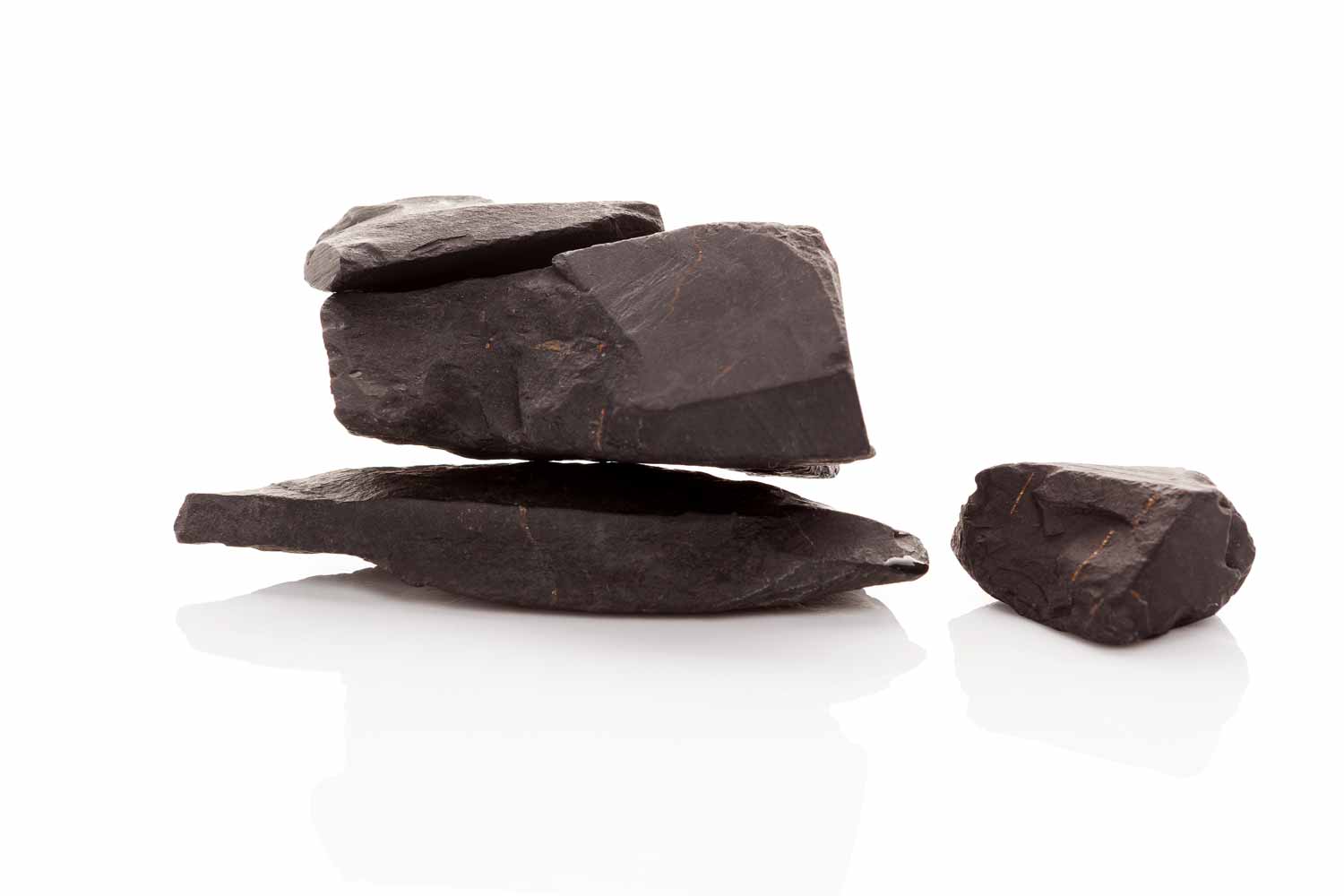
About Shungite Stone
Its Origins & Its History
About Shungite Stone
About Shungite Stone
What is Shungite?
Shungite is best described as a mineraloid, rather than a rock, mineral, or gemstone.
A mineraloid is a naturally occurring material that does not meet all the criteria required to be classified as a mineral. While minerals are composed of a single substance with a well-defined crystalline structure, mineraloids lack this crystalline organization.
How Mineraloids Differ From Rocks and Minerals
- Rocks are made up of multiple minerals or substances combined together.
- Minerals consist of a single substance with a repeating crystalline structure.
- Mineraloids, such as shungite, are composed of a single primary substance but do not form a crystalline lattice.
Because of this structural difference, mineraloids are categorized separately in geology.
Why Shungite Is Classified as a Mineraloid
Shungite is composed primarily of carbon, an element commonly found in both organic and inorganic materials. However, unlike gemstones or minerals, shungite does not have a crystalline structure.
Gemstones are often valued for their crystalline form, which allows them to refract light and produce a reflective or polished appearance. Shungite’s structure is non-crystalline, giving it a more matte or subdued surface rather than a gem-like sparkle.
This non-crystalline composition is what places shungite in the mineraloid category.
A Distinct Natural Material
Shungite’s classification as a mineraloid reflects its geological structure and composition, not any functional or performance characteristics. Its uniqueness lies in how it formed and how it differs structurally from both rocks and minerals.
Shungite is appreciated today for its natural origin, material composition, and distinctive appearance.
Carbon and Shungite Stone
Carbon is a fundamental chemical element found throughout the natural world. It is one of the primary building blocks of organic matter and plays an essential role in many natural processes. Carbon is also notable for its ability to bond with other elements in a wide variety of ways, resulting in a large number of naturally occurring compounds.
Shungite stone is composed primarily of carbon, which is central to its classification and geological interest.
Carbon in the Earth’s Crust
Although carbon is essential to life, it makes up a relatively small percentage of the Earth’s crust. Most naturally occurring carbon is found in specific geological formations or bound within compounds rather than as free elemental carbon.
Different forms of carbon can appear very different depending on how the atoms are arranged.
Crystalline and Non-Crystalline Forms of Carbon
Carbon can exist in several structural forms, known as allotropes:
- Diamond is a crystalline form of carbon, known for its tightly bonded atomic structure.
- Graphite, another crystalline form of carbon, has a layered structure and is commonly used in pencils.
- Shungite differs from both because it does not have a crystalline lattice. Instead, it is considered a non-crystalline (amorphous) form of carbon.
This difference in atomic structure is what distinguishes shungite from other carbon-based materials.
Fullerenes in Shungite
Some shungite samples contain naturally occurring carbon structures known as fullerenes. Fullerenes are spherical or cage-like arrangements of carbon atoms that have been studied in physics, chemistry, and materials science for their molecular structure.
The presence of fullerenes is a material characteristic of certain shungite deposits and is discussed in scientific research in terms of structure and composition. References to fullerenes describe geological and chemical properties, not functional performance or effects.
Precambrian Origins of Shungite
Shungite is a naturally occurring carbon-based stone that has been identified in geological formations dating back to the Precambrian era, a period that began more than two billion years ago.
This places shungite among the oldest known carbon-rich materials found on Earth. While shungite is relatively unfamiliar in modern gemstone classifications, its geological origins are ancient.
Geological Timeframe
The Precambrian era predates the development of complex life forms. During much of this period, life on Earth is understood to have consisted primarily of simple, single-celled organisms.
Shungite’s formation is associated with this early stage of Earth’s geological history, based on age estimates of the rock layers in which it is found.
Age Comparisons in Context
Some geological estimates suggest that many diamonds formed later than the Precambrian period, often under different conditions deep within the Earth’s mantle.
Age comparisons between materials such as shungite and diamonds are used in geology to provide context, not to imply value, rarity, or performance differences.
Ongoing Scientific Study
The exact formation process of shungite is still the subject of geological research. While scientists have identified its composition and age range, questions remain about the specific conditions under which it formed.
As with many ancient geological materials, current scientific understanding continues to evolve as new research and analytical methods emerge.
Geological Origin of Shungite
The precise geological processes that led to the formation of shungite are still being studied. While scientists have identified its age, composition, and location, aspects of its origin remain the subject of ongoing research rather than definitive conclusions.
One characteristic that draws scientific interest is shungite’s geographically concentrated occurrence. Significant deposits are found primarily in the Karelia region of northwestern Russia, near the border with Finland. Compared to many other carbon-rich materials, this distribution is relatively limited in area.
Geologists note that localized deposits are not unusual in Earth’s history, particularly for materials formed under very specific environmental and geological conditions.
Size and Location of Deposits
The known shungite-bearing region covers a finite area, estimated at several thousand square miles. Its concentration within a defined geological zone provides researchers with valuable context for studying the conditions present during its formation.
Early Formation Hypotheses
Over time, several hypotheses have been proposed to explain how shungite formed. These hypotheses are part of scientific discussion and do not represent established conclusions.
Carbon Sediment Hypotheses
Some early ideas suggested that shungite may have originated from ancient organic material subjected to extreme geological processes over time. However, current age estimates place shungite’s formation significantly earlier than the period during which crude oil is believed to have formed.
Because crude oil is generally associated with much later geological periods, this explanation is not widely supported in relation to shungite’s age.
Extraterrestrial Material Hypotheses
Another area of discussion in geological literature involves the possibility that extraterrestrial material contributed to shungite’s formation. This hypothesis is based on comparisons between shungite’s carbon structures and those found in some meteorites.
While ancient impact structures exist in the broader region and date back billions of years, no direct causal relationship between meteorite material and shungite deposits has been established. As such, this idea remains theoretical and unproven.
Current Scientific Understanding
At present, scientists agree on several core points:
- Shungite is an ancient, carbon-rich mineraloid
- It formed during the Precambrian era
- Its composition and structure are well documented
However, the exact sequence of geological events that produced shungite continues to be an area of study. Like many ancient Earth materials, understanding evolves as analytical methods improve.
Fullerenes
Fullerenes are hollow, cage-like molecules composed entirely of carbon atoms. They were first identified in laboratory research in 1985, and this discovery contributed to the awarding of the Nobel Prize in Chemistry in 1996 to the scientists involved in their study.
In scientific research, fullerenes are examined for their molecular structure and geometry. Discussion of fullerenes focuses on their physical and chemical characteristics within academic and materials-science contexts.
Fullerenes in Shungite
Some shungite deposits have been found to contain naturally occurring fullerenes. This makes shungite of interest to geologists and researchers studying naturally formed carbon materials.
References to fullerenes in shungite describe composition and structure, not functional performance. The presence of fullerenes is considered a material characteristic, rather than an indicator of effects, benefits, or outcomes.
Shungite is notable as a naturally occurring stone in which fullerenes have been identified, though the concentration and presence can vary depending on the specific deposit.
Scientific Relevance
Interest in shungite within scientific literature is related to:
- Its high carbon content
- Its non-crystalline structure
- The occurrence of specific carbon formations, including fullerenes
This research is conducted in geological, chemical, and material-science settings and does not imply consumer applications or functional properties.
About Imitation or Misidentified Materials
Stones from other regions, including parts of Asia, may appear visually similar to shungite due to their dark color or carbon content. However, these materials often differ in geological origin, composition, and structure.
Such stones may be formed from volcanic ash or other carbon-containing processes and are not classified as shungite. Differences between materials are determined through mineralogical analysis and should not be interpreted as indicators of performance, effectiveness, or use.
Historical & Folk References to Shungite
While shungite became more widely known outside of Russia in recent centuries, the stone has a long history within the Karelia region. Historical writings and regional folklore indicate that dark, carbon-rich stones—later identified as shungite—were part of local customs and traditions for hundreds of years.
References to shungite in early Russian chronicles reflect belief systems and practices of their time, rather than modern scientific understanding.
Early Written References
One of the earliest historical figures associated with written references to shungite is Ivan the Terrible, who ruled Russia from 1533 to 1584. During this period, shungite was commonly referred to as “black slate.”
Accounts from this era suggest that the stone was known among segments of Russian society, including the aristocracy, and was associated with personal care traditions and natural springs. These descriptions reflect historical usage and perception, not documented outcomes.
Interest During the Reign of Peter the Great
In the early 18th century, Peter the Great established industrial operations near Lake Onega, an area where shungite naturally occurs.
Historical records note that Peter the Great took interest in mineral-rich water sources in the region and ordered observations of local springs associated with the stone. These actions are often cited as examples of early state-sponsored curiosity about natural materials, rather than formal scientific validation.
Marcial Waters: A Historical Spa Site
Following these observations, Peter the Great established a resort known as Marcial Waters, considered one of Russia’s earliest spa locations.
The site was frequented by members of the royal court and reflected broader European traditions of the time, when mineral springs were commonly incorporated into leisure and personal routines. Such practices were based on cultural beliefs and customs of the era, not modern medical evidence.
Later History and Local Tradition
After the death of Peter the Great, Marcial Waters was eventually closed, and broader state-level interest in shungite declined. However, local communities in Karelia continued to reference shungite in traditional practices passed down through generations.
These traditions remained part of regional folklore and cultural heritage, reflecting how natural materials were historically perceived and incorporated into daily life.
Historical Research & Scientific Interest in Shungite
Interest in shungite within academic and institutional settings has developed gradually over time. In the early 20th century, references to mineral-rich water sources associated with carbon-based stone deposits in Karelia appeared in regional records and exploratory studies. These efforts reflected the period’s broader curiosity about natural materials rather than modern clinical research.
Plans to further examine these water sources and related geological materials were interrupted by global events, including the outbreak of World War II, which halted many scientific and infrastructure projects across Europe.
Renewed Regional Interest
In the mid-20th century, interest in shungite resurfaced at a regional level. Facilities associated with mineral springs were reconstructed and used primarily by local populations, consistent with historical European traditions that incorporated natural environments into daily routines and leisure activities.
These uses were based on custom and tradition, not contemporary scientific validation.
Shungite Stone & EMF-Conscious Living
Electromagnetic fields (EMFs) are a byproduct of modern technology and are commonly discussed in conversations about contemporary living and technology use. Many people today choose to take a mindful and intentional approach to how they interact with electronic devices in their daily environments.
Shungite stone is often selected by individuals who are interested in an EMF-conscious lifestyle, appreciating the stone for its natural origin, carbon-based composition, and long geological history.
Material Composition in Context
Shungite is composed primarily of carbon and has been studied within geological and materials-science disciplines for its structure and formation. Carbon materials are widely researched in academic settings for their physical and chemical characteristics.
References to carbon and fullerene structures in shungite describe material composition only. These characteristics are discussed in scientific literature in terms of structure and classification, not as functional mechanisms or performance outcomes.
Modern Use as a Lifestyle Choice
Today, shungite is incorporated into personal spaces, accessories, and decorative objects by individuals who value:
- EMF-conscious lifestyles
- Thoughtful design
- A mindful approach to technology use
- Intentional environments
- Natural materials